
Every Pakistani home knows the smell of Chana Pulao on the stove. The golden onions frying in oil, the whole spices popping, and then the deep earthy scent of chickpeas and rice coming together in one pot. This dish has been part of South Asian food culture for a very long time. Most people eat it without ever wondering where it came from. But when you trace its history properly, you find two separate ingredients, each with roots going back thousands of years, that came together through trade routes, royal kitchens, and generations of home cooks.
Understanding the full history of Chana Pulao means going back to where chickpeas started and where pulao cooking began. Both journeys are long. Both are documented. And they both end in the same pot.
The History of Chickpeas

Where Chickpeas Were First Grown
Chickpeas rank among the oldest crops ever domesticated by human beings. Their cultivation goes back roughly 10,000 years. The wild plant from which chickpeas developed is a species called Cicer reticulatum. This wild plant was only found in southeastern Turkey and a narrow strip of northern Syria. Early farming communities in that region began selecting and replanting it. Over many generations the wild plant was transformed into the chickpea people grow and eat today.
From southeastern Turkey and Syria, chickpeas traveled outward. They moved with humans along ancient trade and migration paths. By roughly 6,000 years ago, chickpea farming had already reached Central Asia and the Indus Valley. This movement was not accidental. People carried seed with them as they moved, planted it in new land, and passed the knowledge of growing it forward to the next generation.
Chickpeas in the Indus Valley Civilization
Multiple archaeological sites in the region that forms present day Pakistan and northwestern India have confirmed chickpea remains going back to between 1750 and 1500 BCE. These sites include Lal Quila and Sanghol in Pakistan. The Indus Valley Civilization that existed across this region was not a simple farming community. It was a sophisticated urban society with planned cities, organized street grids, drainage infrastructure, and structured agricultural systems. Chickpeas were part of this agricultural system. They were cultivated deliberately alongside other pulses such as lentils and green gram.
This archaeological fact carries enormous weight for anyone studying the history of Chana Pulao. It places chickpeas in Pakistani soil well over 3,500 years before the Mughal Empire was ever established. This ingredient did not arrive with the Mughals or with any other external power. It was already here, grown and eaten by the people of this land long before those empires existed.
Desi and Kabuli Varieties
Not all chickpeas are the same. Two types matter in the history of this dish.
| Variety | Physical Features | Historical Origin |
|---|---|---|
| Desi | Small, dark seeds with a thick rough outer coat | Original domesticated type from Turkey and Syria |
| Kabuli | Large, cream-colored seeds with a thin smooth coat | Entered South Asia through Afghanistan centuries later |
The Desi variety is the older of the two. Its physical characteristics closely match the chickpea remains that archaeologists have found at ancient South Asian sites. The Kabuli variety arrived in the subcontinent much later. Research using genetic data from chickpea varieties across multiple countries confirmed that the large cream-colored Kabuli type is linked to Central Asia and entered South Asia through Afghanistan. The name Kabuli itself comes from Kabul, the Afghan capital, which was the main point of entry for this variety into the subcontinent. Today both types are used in Pakistani cooking, and both have been grown here for centuries.
Chickpeas in Ancient Medical and Literary Records
Ancient Sanskrit literature from between the 1st and 4th century CE refers to chickpeas using the term chennuka. The modern word chana, used across Pakistan and India today, developed from this Sanskrit root. This linguistic evidence confirms that chickpeas were not just an agricultural product in this region but were culturally embedded in the everyday language of the people who grew them.
Early Ayurvedic texts from South Asia also mentioned chickpeas as a food recognized for building physical strength and providing sustained nutrition. These texts noted chickpeas as a high protein food source. Farmers in this region valued the crop especially because it survived dry conditions and poor soil quality where other crops could not survive.
The Mughal Emperor Who Chose Chickpeas Above All Else
One of the most cited historical accounts connecting chickpeas to Mughal royal culture involves Emperor Shah Jahan. After Aurangzeb imprisoned his father, Shah Jahan was given the choice of one food to live on. He chose chickpeas. His reasoning, as recorded in historical accounts, was that chickpeas can be prepared in more ways than almost any other single ingredient. This account from Mughal period records tells us something important. Even at the very highest level of South Asian royal society, chickpeas were considered one of the most valued and versatile foods available.
The History of Pulao
Pulao Begins in Ancient Persia
The cooking method that became pulao started in ancient Persia, which is present day Iran. Persian cooks developed a technique of preparing rice in seasoned broth with spices and other additions, all cooked together in one sealed vessel. The result was rice that came out fully flavored, aromatic, and with each grain staying separate and fluffy. In Persian this preparation was called polo or pulao. It was not regular everyday food in its earliest form. Persian royal courts served it at important state banquets and formal feasts. It was a food associated with high social standing and generous hospitality.
Persian cooks used ingredients like saffron, dried fruits, nuts, cinnamon, and cardamom to build complex layered flavors inside their pulao. The core technique of letting rice absorb seasoned liquid rather than just boiling it in plain water was the key innovation. This is what made pulao a distinct and recognizable category of rice preparation separate from all others.
The First Written Record of Pulao Cooking
The earliest written documentation of the pulao cooking method comes from the 10th century. Abu Ali Ibn Sina, the Persian scholar and physician known in the Western world as Avicenna, described a rice preparation technique in his written works. He also noted the health value of eating rice prepared by this method. Food historians and researchers recognize this as the oldest formally recorded description of what became pulao. Ibn Sina is widely credited by culinary historians as the first person to document the dish in writing.
The English word pilau, which comes from the same dish, first appeared in written English records in 1609. It was traced back to the Persian word pulaw, which was already in regular use by the 16th century. This linguistic paper trail confirms the Persian origin of pulao not only through historical texts but through language records that span several centuries.
How Pulao Traveled to Other Parts of the World
Ancient Persia controlled or connected to major trade routes that ran between East Asia, Central Asia, the Middle East, and South Asia. Merchants, soldiers, and traveling scholars who moved along these routes carried food knowledge alongside their trade goods. Pulao traveled the same way. It entered Central Asia where it became so deeply rooted that Uzbekistan and Tajikistan eventually adopted it as their national dish under the name Plov. It moved into the Arab world. It reached the Mediterranean and found its way into European cooking where it evolved into dishes including Spanish paella.
Pulao Reaches South Asia Through the Abbasid Caliphate
The first major movement of pulao style cooking into South Asia happened during the Abbasid Caliphate period, which ran from the 8th to the 13th century. At this time a shared cultural and culinary sphere stretched from the Indian subcontinent all the way across to Spain. The technique of cooking rice in seasoned broth spread across this entire territory during the Abbasid era.
Food historian K.T. Achaya documented in his research volume A Historical Dictionary of Indian Food that the word pilav, pulao, or pallao has roots in both Persian and Arabic but found its way into Sanskrit and early Tamil literature as far back as the 3rd to 6th centuries CE. Spanish paella and South Asian pulao both trace their development to this same Abbasid era spread of rice cooking methods. This places pulao style cooking in the Indian subcontinent well before the Mughal Empire arrived.
Pulao Under the Mughal Empire
The Mughal Empire ruled the subcontinent from 1526 CE until the mid 19th century. The first Mughal emperor Babur came from Central Asia where pulao was already central to the food culture. Mughal records confirm that Babur complained about the food of the subcontinent when he first arrived. He was accustomed to the Central Asian diet, with pulao as a core component, and found the subcontinent’s food unfamiliar.
The Mughals brought Persian chefs and Persian cooking traditions with them to their new court. The Ain-i-Akbari, the detailed administrative record of Emperor Akbar’s court written by his court historian Abu’l Fazl in 1590, documented the royal kitchen system extensively. Abu’l Fazl recorded that the Mughal diet relied heavily on rice, wheat, gram, barley, and lentils. The Ain-i-Akbari listed multiple rice preparations cooked in the royal kitchen, placing palaos and biryanis in the same category, noting that the royal kitchen prepared both from rice and meat cooked together.
Colleen Taylor Sen, in her book Feasts and Fasts: A History of Indian Food, reconstructed a recipe from Abu’l Fazl’s chronicle for a dish called shulla. The preparation involved meat fried in ghee, followed by the addition of water, salt, chickpeas, and cinnamon, all simmered together. This 16th century Mughal court dish combining meat with chickpeas in a rice preparation represents one of the earliest formally documented records of chickpeas and rice being cooked together in one preparation inside the South Asian royal kitchen.
Food historian Salma Yusuf Husain, a Persian scholar and award-winning culinary historian whose book The Emperor’s Table: The Art of Mughal Cuisine received the National Tourism Award in 2009 and the Gourmand World Cookbook Award for culinary history in the same year, spent years researching original Persian manuscripts from the Mughal era. Her research confirmed that the Mughal royal kitchen contained dozens of distinct pulao preparations. These were not limited to meat alone. The manuscripts she worked from documented rice preparations that included legumes, dried fruits, and various local additions.
How Chana Pulao Developed
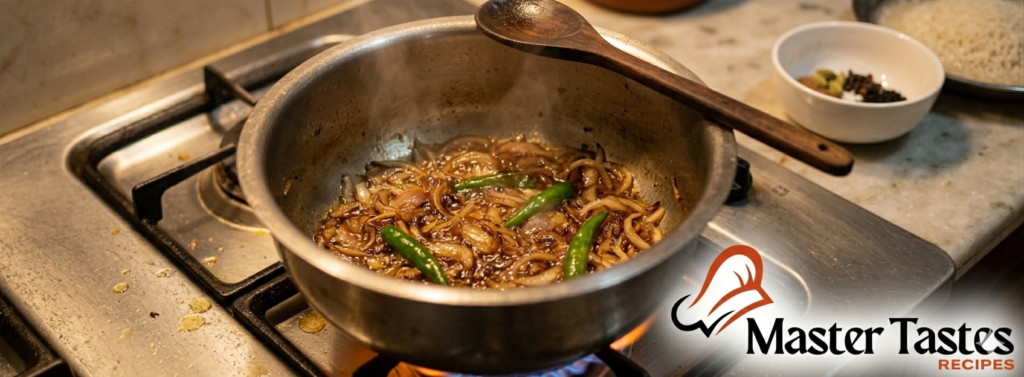
The Oldest Documented Rice and Chickpea Dish in South Asia
Chickpeas had been grown in the Pakistan region for over 3,500 years before the Mughals arrived. Pulao cooking had been present in the subcontinent since the Abbasid period. By the time the Mughal Empire was established, both ingredients were already deeply embedded in the same food culture. Combining them in one pot was a natural step for cooks who worked with both every day.
The earliest historical record of rice and chickpeas being deliberately combined as a named dish in South Asia comes from the Mughal period. The dish was called Qubooli. Historical records including letters from Mughal Emperor Aurangzeb to his son, collected in a volume known as the Rukat-e-Alamgiri, confirm that Aurangzeb valued a preparation of rice cooked with Bengal gram, dried apricot, basil, almonds, and curd. Salma Yusuf Husain documented this dish in her culinary history research drawn directly from Mughal era Persian manuscripts.
Mughal records also document a simpler preparation called Khubooli, which was rice cooked specifically with chickpea lentils. This version was prepared during Muharram, when meat was avoided for religious reasons. It was served at communal gatherings and offered during prayers. This documented connection between rice, chickpeas, and Muharram in the Mughal period is the direct historical ancestor of the same practice followed in Pakistani homes and mosques today.
The Afghan Contribution
Pakistan shares a long land border with Afghanistan. The exchange of food traditions, cooking methods, and agricultural knowledge between the two regions has been continuous across centuries. Afghanistan’s national dish, Kabuli Pulao, has long combined rice with chickpeas, lamb, carrots, raisins, and dried fruits as its core preparation. Researchers who have traced the spread of Kabuli Pulao confirmed that varieties of this preparation moved from Afghanistan into western and northwestern Pakistan over time. The Afghan tradition of placing chickpeas alongside rice in pulao directly contributed to how similar preparations developed in the provinces of Pakistan that share a border with Afghanistan.
How It Spread Across All Four Provinces
Chana Pulao has no single city or province of origin inside Pakistan. Both of its main ingredients were already local staples across every region. Each province developed its own version based on local cooking habits and available ingredients.
- Punjab built it around deeply browned onions cooked until almost caramelized, with a strong yakhni broth forming the base
- Khyber Pakhtunkhwa kept the preparation simpler with a stronger whole spice character and less layered seasoning
- Sindh often served it as a supporting rice dish alongside meat based gravies and curries
- Western regions bordering Afghanistan developed versions that carried stronger Afghan pulao influences
Multiple names for the same dish across Pakistan confirm how widely it spread and how each community made it their own.
| Name | Where It Is Used |
|---|---|
| Chana Pulao | Standard Urdu term used across Pakistan |
| Chanay Ka Pulao | Common in Punjabi speaking households |
| Chole Pulao | Used in some northern and urban areas |
| Kabuli Chana Pulao | When large Kabuli variety chickpeas are used |
| Degi Chana Pulao | Large pot community version cooked at gatherings |
Chana Pulao in Pakistani Food Culture
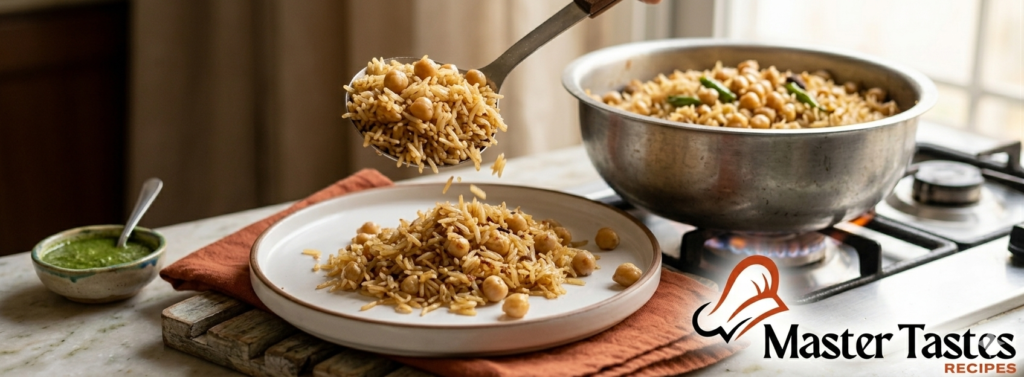
Its Role in Muharram Observances
Chana Pulao holds a specific and well documented place in Pakistani religious food practice. During Muharram, the Islamic month of mourning, many Muslim communities avoid meat based food. The practice of preparing rice and chickpeas together during this period traces directly back to the Mughal era documentation of Khubooli as a Muharram dish. That tradition has continued in Pakistan without interruption for centuries. Today, large pots of Chana Pulao are prepared and distributed at mosques, imambargahs, and community gathering spaces across all four provinces every year during Muharram. It is one of the clearest examples of a food tradition passing unchanged from the Mughal period into modern Pakistani life.
Why It Never Left Pakistani Kitchens
Chana Pulao stayed in Pakistani kitchens across every generation because it worked for everyone. Several practical factors explain its staying power.
- Chickpeas were affordable and available across all regions throughout the full year
- Basmati rice was already the standard grain for all pulao cooking across Pakistan
- The whole spices needed were basic items found in every household kitchen
- The dish gave complete protein and carbohydrate nutrition without requiring meat
- A single large pot could feed a small family or a gathering of dozens at low cost
These qualities made it equally practical for wealthy households and modest ones. A dish that crosses economic lines and still delivers real nutrition and real flavor tends to stay. Chana Pulao has done exactly that across centuries and across all four provinces of Pakistan.
After 1947
When Pakistan came into being in 1947, Chana Pulao was already a fixed part of the food culture across the entire region. Families that relocated during Partition carried regional cooking traditions with them to new cities. The dish needed no introduction anywhere in the new country. Pakistani food culture after independence preserved the Mughal era pulao cooking methods as a structural foundation while developing its own national identity across decades. Chana Pulao remained a consistent part of that identity through every generation since.
Today Pakistani communities in the United Kingdom, Canada, the United States, Australia, and across the Gulf region continue to prepare Chana Pulao in their homes abroad. The dish has traveled with the people who grew up eating it and is now recognized as part of Pakistani food culture on every continent where Pakistani communities have built their lives.
Historical Timeline of Chana Pulao
| Historical Event | Time Period |
|---|---|
| Chickpea first domesticated in southeastern Turkey and Syria | Around 10,000 years ago |
| Chickpeas reach Central Asia and the Indus Valley | Around 6,000 years ago |
| Confirmed chickpea cultivation in Pakistan region at Lal Quila and Sanghol | 1750 to 1500 BCE |
| Pulao cooking documented by Ibn Sina in Persia | 10th century CE |
| Abbasid Caliphate spreads pulao cooking into South Asia | 8th to 13th century CE |
| Mughal Empire established in South Asia under Babur | 1526 CE |
| Ain-i-Akbari records chickpea and rice dish called shulla in Mughal royal kitchen | 1590 CE |
| Qubooli rice and chickpea dish documented in Aurangzeb era Rukat-e-Alamgiri | 1658 to 1707 CE |
| Khubooli rice and chickpea preparation recorded for Muharram observance | Mughal period |
| Pakistan established with Chana Pulao as part of national food culture | 1947 CE |
Frequently Asked Questions About Chana Pulao
What is the origin of Chana Pulao
Chana Pulao developed from two separate food histories that met in South Asia. Chickpeas have been grown in the Pakistan region since at least 1750 BCE based on confirmed archaeological evidence at multiple Indus Valley Civilization sites. Pulao cooking originated in ancient Persia and reached South Asia during the Abbasid Caliphate period before being further developed under the Mughal Empire from 1526 CE onward.
The earliest formally documented combination of rice and chickpeas as a named prepared dish in South Asia comes from Mughal era records. The dish called Qubooli, confirmed through the Rukat-e-Alamgiri letters of Emperor Aurangzeb and the culinary history research of Salma Yusuf Husain, is the oldest known historical ancestor of what Pakistani families call Chana Pulao today.
Is Chana Pulao a Pakistani dish or an Indian dish
Chana Pulao belongs to the shared food heritage of the South Asian region as a whole. It developed across the Indian subcontinent over many centuries before Pakistan and India became separate nations in 1947. Both countries prepare the dish today.
Inside Pakistan it is cooked in homes across all four provinces and carries a specific recognized role in Muharram religious food traditions that trace directly back to documented Mughal era practices. Pakistani communities worldwide also prepare it as a recognized part of their national food identity.
What is the difference between Chana Pulao and biryani
Chana Pulao is a single pot dish where rice and chickpeas are cooked together in seasoned broth from the beginning. The spicing comes from whole spices releasing slowly into the broth during cooking. Biryani uses a layering method where rice and the main ingredient are cooked separately and then assembled in layers before being steamed together in a sealed vessel.
Biryani uses more intense spicing including ground masalas, yogurt, saffron, and fried onions layered between the rice. Food historian Lizzie Collingham documented that modern biryani developed in the Mughal royal kitchen as a combination of Persian pilau methods and the stronger spice traditions of Hindustan. Chana Pulao is lighter, simpler, and quicker to prepare compared to biryani in both cooking method and overall flavor profile.
Why is basmati rice used in Chana Pulao
Its grains remain separate and fluffy after cooking, which is the defining texture of properly made pulao. Short grain rice becomes sticky and clumped when cooked and does not produce the correct result for this dish. Persian cooks during the Mughal era specifically valued this quality in rice. The Ain-i-Akbari records of the Mughal court noted the types of rice used in royal preparations, with long grain aromatic varieties considered the superior choice for pulao cooking.
Why is Chana Pulao prepared during Muharram in Pakistan
During Muharram, Muslim communities observe a period of mourning and many avoid meat based food as a mark of respect. The practice of cooking rice with chickpeas during this period traces back to Mughal era historical records that document a dish called Khubooli, made specifically from rice and chickpea lentils and served at Muharram gatherings and prayers. This documented Mughal practice has continued in Pakistan without interruption for centuries. Today large quantities of Chana Pulao are prepared and distributed at mosques and community gatherings across Pakistan during Muharram every year.
What spices go into traditional Chana Pulao
Traditional Chana Pulao is built on whole spices rather than ground spice blends. The standard spices used are cumin seeds, bay leaves, black peppercorns, cinnamon sticks, cloves, and black cardamom. These are fried in oil first before the chickpeas and rice go into the pot. The flavor develops as these whole spices release their oils slowly into the cooking liquid during preparation. This whole spice approach gives Chana Pulao its clean, earthy, and gently aromatic flavor that is distinctly different from the heavier layered spicing found in biryani.
What does the word Qubooli mean and how is it connected to Chana Pulao
It was the name of a Mughal era rice and chickpea dish confirmed in historical records from the period of Emperor Aurangzeb. The Rukat-e-Alamgiri, a collection of Aurangzeb’s letters, records that the emperor was fond of this preparation made with rice, Bengal gram, dried apricot, basil, almonds, and curd. Food historian Salma Yusuf Husain researched this dish as part of her work on Mughal cuisine, drawing from original Persian manuscripts of the period. Qubooli is the oldest formally documented preparation combining chickpeas and rice in South Asian culinary history and is considered the direct historical ancestor of the Chana Pulao prepared in Pakistani homes today.
How long have chickpeas been eaten in Pakistan
Archaeological evidence confirms chickpea cultivation in the region that forms present day Pakistan going back to at least 1750 BCE. Sites including Lal Quila and Sanghol in Pakistan have yielded confirmed chickpea remains from that period. This means the people of this land have been growing and eating chickpeas for over 3,700 years. That predates the arrival of the Mughal Empire by roughly 3,200 years and makes chickpeas one of the oldest continuously cultivated crops in Pakistani agricultural history.
About the Author
EMMA is a food culture and culinary history writer with a focus on South Asian and Pakistani food traditions. Having grown up in a Pakistani household where Chana Pulao was a regular part of family meals and Muharram gatherings, this writer brings both personal familiarity and thoroughly researched historical knowledge to every article on this site. Articles on this site are based on verified historical sources, documented manuscripts, and recognized culinary history research.

Hi, I’m Emma, a passionate home chef and the heart behind MasterTastes.com. With over 5 years of hands on experience in the kitchen. I specialize in creating simple flavorful and foolproof recipes that bring restaurant quality taste to everyday home cooking.
From quick weeknight meals and traditional Pakistani & Indian classics to modern fusion dishes and indulgent desserts my recipes are tested budget friendly and designed for real life kitchens especially for beginners and busy home cooks.
My goal is simple: to help you cook with confidence impress your family and guests and turn every meal into a delicious memory.