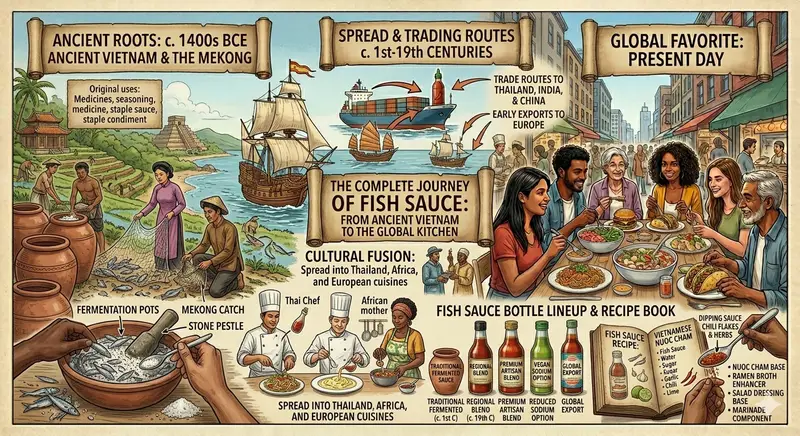
History of Fish Sauce: Fish sauce originally comes from ancient Vietnam where it started as a way to preserve fish in the tropical climate. Today its commonly eaten across Southeast Asia especially in Vietnam Thailand and the Philippines as a staple in everyday cooking.
Origin of Fish Sauce
Back in ancient times around two thousand years ago people in what is now Vietnam figured out how to turn extra fish into something that lasted. They mixed small fish with salt and let it sit drawing out the liquids over months. This happened along the coasts where fishing was big and salt was easy to get from the sea. Historians think it grew from earlier Chinese ideas of fermenting soy with fish but the Vietnamese made it their own by skipping the beans and focusing on pure fish.
The Cham people in the Champa kingdom get credit for refining it early on around the fifth century. You can imagine the smell of salty brine filling the air in those coastal villages with jars buried in the sand to ferment slowly. It was practical turning potential waste into a flavor booster for rice and veggies. Over time this simple method spread because it worked so well in hot humid places.
Traditional Ingredients and Methods
Classically, you need small oily fish like anchovies or sardines, and plenty of sea salt. The ratio is usually three parts fish to one part salt, enough to preserve without overwhelming the taste. Folks would clean the fish lightly, then layer them in big earthen pots with salt sprinkled between. No fancy tools, just time and the sun. They’d weigh it down with stones and leave it outside, where the heat helped break everything down into that amber liquid.
After six months or so, they’d drain it, sometimes pressing the solids for more yield. The first drain was the best quality, clear and strong, while later ones were milder. You know that pungent aroma that hits you first, then the deep savory note? That’s from the natural breakdown of proteins into umami compounds. In old villages, families passed down their pots, reusing them for generations, which added unique flavors from built up bacteria. It was all about patience and local fish availability.
Regional Variations in Southeast Asia
In Vietnam, nuoc mam is often made with anchovies from Phu Quoc island, giving it a lighter, sweeter edge from the local waters. Thai nam pla uses similar fish but sometimes adds a touch more salt, making it bolder for curries. Over in the Philippines, patis comes from fermenting small shrimp or fish, resulting in a milder, almost nutty taste that’s great in adobo. Cambodian prahok is thicker, more like a paste, from larger fish mashed and fermented shorter.
Each spot tweaks the process based on what’s around, like using clay pots in Vietnam or wooden barrels in Thailand. The texture can vary too, some are runny while others are viscous. Taste one from Vietnam and it’s fishy with a hint of caramel, but a Thai version bites back sharper. These differences come from the fish species and fermentation length, fitting local palates perfectly.
Variations in East Asia
Up in China, yulu is rarer now but uses freshwater fish for a subtler flavor, often mixed with soy. Japanese shottsuru from the north coast ferments sardines longer, giving a smoky depth for soups. Korean aekjeot is saltier, from herring, and used in kimchi. These are less common than soy sauce today, but they show how the idea adapted northward.
Cultural Significance
Fish sauce ties into daily life and celebrations across Southeast Asia. In Vietnam, it’s on every table, symbolizing home and family meals shared over rice. During Tet holidays, families make extra batches to gift, representing prosperity from the sea. Thai people use it in temple offerings or street food rituals, where the umami honors ancestors. It’s woven into folklore too, like stories of fishermen discovering it by accident during monsoons.
The smell during making becomes a neighborhood marker, drawing people together for chats. At weddings or festivals, dishes laced with it signify abundance and flavor harmony. You feel that salty tang on your tongue, mixed with herbs, evoking warm gatherings. It’s not just food, it’s a cultural thread connecting generations, reminding folks of coastal roots and simple joys. Even in modern cities, it keeps traditions alive in quick noodle bowls.
Significance in Rituals and Daily Customs
In some Cambodian villages, prahok making is a communal event before rainy season, with songs and stories. Filipinos blend patis into family recipes passed down, strengthening bonds. It’s practical magic, turning humble ingredients into something special.
How it Spread and Modern Use
Fish sauce traveled through trade routes, hitting China by the seventeenth century via merchants from Vietnam. From there, it hopped to Europe with explorers, but faded until recent global food trends. Migration played a big role, Vietnamese refugees in the seventies brought it to America, sparking fusion dishes. Now it’s in everything from trendy salads to cocktails worldwide. Modern makers use stainless steel tanks for consistency, shortening fermentation to months with controlled temps.
You still get that intense hit, but it’s cleaner. In kitchens today, chefs experiment, like drizzling it on pizza or ice cream for contrast. The texture feels silky now, with labels boasting organic fish. It’s evolved from survival food to gourmet staple, adapting to busy lives while keeping its core punch.
Spread Through Trade and Migration
Ancient silk roads might have carried early versions from Rome to Asia, but Southeast styles dominated later exchanges. European colonists tried replicating it, but local versions won out. Today, diaspora communities in Australia or France keep it authentic in markets.
Modern Adaptations and Innovations
Factories add flavors like garlic or chili for ready mixes. Vegan versions use mushrooms, mimicking the umami. Home cooks shorten processes with pressure cookers, though purists stick to tradition. It’s in health trends too, for its probiotics and minerals.
Evolution Over Centuries
From its Vietnamese roots, fish sauce shifted with empires. During colonial times, French in Indochina exported it, blending into baguettes with pate. Post war, it symbolized resilience in refugee camps. The twentieth century saw industrialization, with bottles lining shelves globally. Flavors softened for Western tastes, less pungent but still effective. You notice the color deepening with age, from pale gold to rich brown. Recipes now include it in non Asian foods, like bloody marys or barbecue sauces. Climate changes affect fish stocks, pushing sustainable sourcing. It’s come full circle, from ancient pots to eco friendly farms.
Technological Changes in Production
Early handmade batches gave way to machines pressing liquids faster. Labs test for quality, ensuring no bad bacteria. This makes it safer, though some miss the wild variations.
Influence on Global Cuisines
In the US, it’s key in fusion tacos or burgers. European chefs use it in stocks for depth. The aroma now mingles with basil or tomatoes, creating new hybrids.
Challenges and Preservation Efforts
Overfishing threatens traditional ingredients, so groups promote farmed anchovies. Pollution in coastal areas affects quality, leading to stricter regulations. Artisans fight to keep old methods alive against cheap imports. You taste the difference in small batch versions, earthier and complex. Education helps, with workshops teaching young folks the craft. It’s about saving culture as much as flavor.
Environmental Impacts
Warmer oceans shift fish patterns, making some varieties scarce. Sustainable labels guide buyers now.
Community Efforts to Preserve Tradition
Villages host festivals celebrating the sauce, with tastings and demos. This keeps knowledge flowing.
That’s pretty much it, I guess. It always turns out a bit different each time depending on the fish and weather.
FAQ’s
What does fish sauce really taste like?
The bottle smells super fishy and sharp. But cook it in food and the bad smell goes away. You end up with nice rich taste that makes everything better.
How do you pick a good quality fish sauce?
Buy ones that only say fish and salt on the bottle. Look for clear golden color. If it says high protein like thirty five or forty degrees N it is usually good.
Is fish sauce healthy to eat?
You get a little protein some B vitamins and iodine. Salt is too much though. Use tiny drops only.
Why does fish sauce smell bad but taste good in food?
Fermenting the fish makes that strong smell. When you mix it in hot food or with other stuff the smell fades. Only the tasty part stays.
Can fish sauce contain shellfish or cause allergies?
Some bottles have small shrimp or krill bits. If you are allergic to shellfish check the label or just take the anchovy only ones.
How do you make a simple dipping sauce with fish sauce?
Take same amount fish sauce lime juice water. Mix. Then put in sugar garlic chili. Good with grilled chicken or fresh rolls.
What happens if you add too much fish sauce to a dish?
Food becomes way too salty. Flavor gets too much. So add very little. Taste first. Add more slow.
Is there a difference between Vietnamese and Thai fish sauce?
Vietnamese nuoc mam stays lighter sometimes little sweet from island fish. Thai nam pla is stronger saltier. Works well in thick curry.
How long does an opened bottle of fish sauce last?
Years in fridge. Salt stops it from going bad. Color gets dark. Taste becomes softer. Still okay to use.
Can you use fish sauce in non Asian recipes?
Yes. Put small bit in stew gravy tomato sauce or Bloody Mary. Gives extra good taste. No one notices fish.
Follow our social media Accounts for updates:

Hi, I’m Emma, a passionate home chef and the heart behind MasterTastes.com. With over 5 years of hands on experience in the kitchen. I specialize in creating simple flavorful and foolproof recipes that bring restaurant quality taste to everyday home cooking.
From quick weeknight meals and traditional Pakistani & Indian classics to modern fusion dishes and indulgent desserts my recipes are tested budget friendly and designed for real life kitchens especially for beginners and busy home cooks.
My goal is simple: to help you cook with confidence impress your family and guests and turn every meal into a delicious memory.