White Chicken Korma
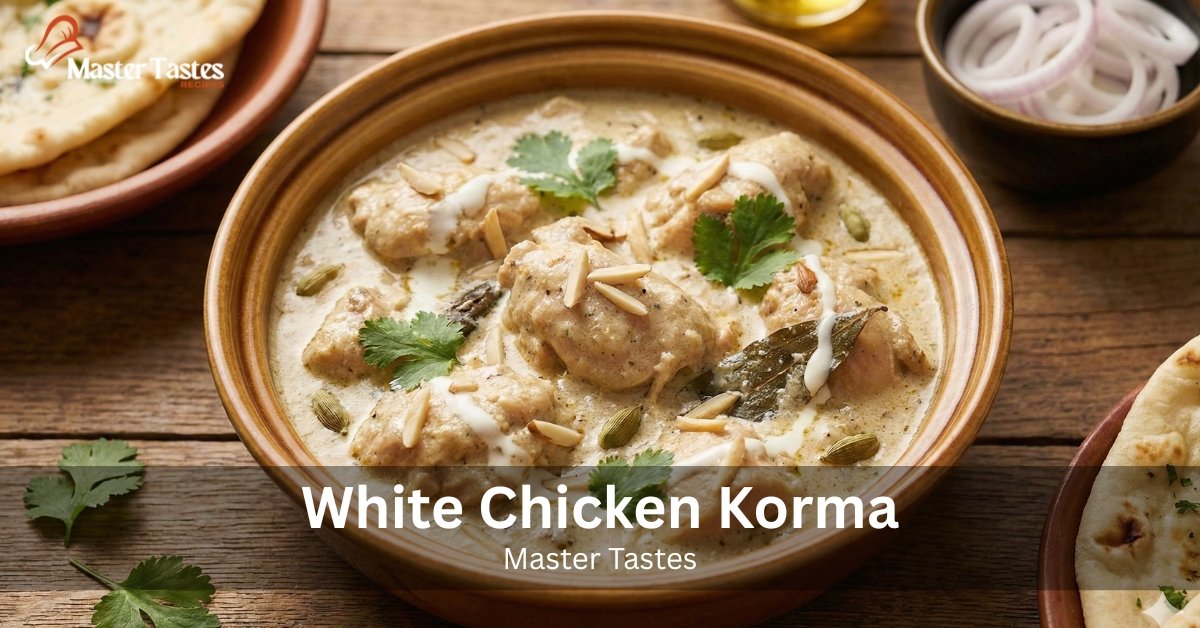
White Chicken Korma is a mild creamy curry from the royal kitchens of North India especially popular in Lucknow and Hyderabad. It uses yogurt almonds and white poppy seeds instead of tomatoes or heavy spices so the colour stays pale and the taste stays gentle. People love it when they want something rich but not hot spicy. The chicken turns soft the gravy feels silky and the aroma of cardamom and kewra is very comforting. This recipe gives you that same restaurant style smoothness at home without any artificial colour or cream overload. Perfect with naan roomali roti or simple jeera rice. Once you try it you will see why families keep asking for it again and again.
Ingredients
| Ingredient | For 0.5 kg chicken | For 1 kg chicken | For 2 kg chicken |
|---|---|---|---|
| Chicken (curry cut) | 500 g | 1 kg | 2 kg |
| Yogurt (thick) | 200 g | 400 g | 800 g |
| Onions (sliced & fried) | 2 medium | 4 medium | 8 medium |
| Cashews (soaked) | 12-15 | 25-30 | 50-60 |
| Almonds (blanched & peeled) | 15 | 30 | 60 |
| White poppy seeds (khus khus) | 1 tbsp | 2 tbsp | 4 tbsp |
| Ginger paste | 1 tsp | 2 tsp | 4 tsp |
| Garlic paste | 1½ tsp | 1 tbsp | 2 tbsp |
| Green cardamoms | 4 | 8 | 16 |
| Cloves | 3 | 6 | 12 |
| Cinnamon stick 1 inch | 1 | 2 | 4 |
| Bay leaf | 1 | 2 | 4 |
| White pepper powder | ½ tsp | 1 tsp | 2 tsp |
| Green chillies (slit) | 2-3 | 4-6 | 8-10 |
| Kewra water | 4-5 drops | 8-10 drops | 15-20 drops |
| Ghee | 3 tbsp | 5 tbsp | 10 tbsp |
| Salt | to taste | to taste | to taste |
How to Make
- Wash chicken and pat dry.
- Whisk yogurt with white pepper powder and a little salt then marinate chicken for at least 1 hour (overnight is better).
- Soak cashews almonds and poppy seeds in warm water for 30 minutes then grind to a very smooth paste with little water.
- Heat ghee in a heavy pan add bay leaf cardamom cloves and cinnamon.
- Add the ginger-garlic paste and cook until the raw flavor gone.
- Put in the marinated chicken stir on high flame for 5 to 6 minutes until it turns white.
- Lower flame cover and cook for 10 minutes stirring once or twice.
- Add the nut paste and fried onions (crush them lightly).
- Mix well add half cup hot water if it looks too thick.
- Cover and simmer on low flame for 15 to 20 minutes until chicken is tender and oil starts floating on top.
- Add slit green chillies and kewra water give one boil.
- Taste and adjust salt. Turn off flame and let it rest 10 minutes before serving.

Instructions
Use full fat yogurt and hang it in muslin for an hour if it is watery so the gravy does not split. I usually fry the onions until golden then crush half and leave half whole it gives nice texture. If you do not have poppy seeds just increase cashews by the same amount. For extra white colour some cooks add a tablespoon of milk powder in the nut paste totally optional. Leftovers taste even better next day. Just heat gently with a splash of milk. Serve with soft naan or lachha paratha and a simple onion cucumber salad on the coolness balances the richness perfectly.
History
Origin of White Chicken Korma
You know many people don’t realize that white korma actually started in the royal kitchens of Awadh during the Nawabi period. When we say Lucknow style cooking most of us think of heavy smoky biryanis but the galawati kebabs yet the same chefs also created this gentle pale curry for queens and children who could not handle red chilli heat. The earliest versions appeared around the 18th century when Persian cooks mixed with local Rajput traditions. They replaced tomato and red chilli (which came later to India) with yogurt nuts and aromatic spices only. The name “korma” itself comes from the Urdu word “qorma” meaning braising so slow cooking in yogurt was the heart of the dish from day one.
Traditional ingredients and methods
I think this part is quite interesting because real old white korma never used cream. Thickness came from blanched almonds cashews and khus khus ground on a sil batta (stone grinder) until they almost turned to butter. Onions were sliced paper thin deep fried until crisp then crushed into the gravy at the last moment so they melted and gave sweetness without colour. Ghee was mandatory sometimes even browned ghee (called “doda ghee”) for deeper taste. Whole spices were kept minimum and always green cardamom dominated because it keeps the aroma light. Cooking happened in sealed copper handis over dying charcoal so the steam stayed inside and chicken became fall off the bone soft. When the lid was opened the whole zenana khana (women’s kitchen) would smell of cardamom and roasted nuts very different from the smoky tandoori section.
Regional variations
Some people say it started this way but in Hyderabad the same dish is called “Safed Murgh Korma” and they add a little coconut along with nuts which makes it slightly sweeter and thinner gravy. In Delhi and Punjab many homes use only cashews and skip poppy seeds because khus khus was once hard to get. Rampur which sits between Lucknow and Delhi has a version where they add a spoon of roasted gram flour in the marinade it gives silky texture and prevents yogurt from curdling. Kolkata’s Anglo Indian families make “chicken stew” that looks almost same but they finish with black pepper and a dash of vinegar totally different taste but same white colour.
Cultural significance
I remember hearing that during Eid ul Fitr in old Lucknow households white korma was served the morning after because everyone was tired of rich red curries from iftar parties. Same on the last day of Muharram the pale colour symbolised peace and calm after days of mourning. In many Awadhi weddings even today safed korma is part of the dawat e walima (groom’s reception) because it suits every age group and does not overshadow the biryani which is the real star. My friend from Bhopal told me their family makes it on the 7th day after a baby is born they believe gentle spices help the new mother recover faster.
How it spread and modern use
Funny thing is white korma stayed inside home kitchens for a very long time. Only in the 1980s when restaurants like Karim’s and Moti Mahal started putting “Shahi White Korma” on menu did common people outside Uttar Pradesh taste it. The big jump came with YouTube and food blogs around 2010 suddenly every home cook wanted to recreate that wedding style curry. Pakistani versions crossed the border and added malai (fresh cream) on top which is delicious but not traditional. Today you find it in London Lahore Dubai everywhere the Indian diaspora settled. Five star hotels sometimes use coconut milk instead of yogurt to make it “lighter” and garnish with silver leaf to look extra royal. At home though most of us still follow grandmother method stone ground nuts yogurt marinade and patience on low flame.
Street side dhabas in Lucknow now sell “white handi” late night same recipe cooked in big brass handis and served with bakarkhani roti. Food delivery apps made it even more popular because the pale gravy photographs well and people order it when they want “something different from butter chicken”. Some modern cooks replace ghee with oil and use blender instead of sil batta but the soul stays same mild rich comforting.
Honestly this one part always makes me curious: even after so many changes the colour has to stay white. If it turns even slightly pink the cook feels they failed. That one rule has travelled centuries and continents without breaking.
So yeah that is the long story of a simple looking curry that carries hundreds of years of gentle royal cooking in every spoonful. It always turns out a bit different each time depending on how patient you are with the flame but when it works the taste takes you straight back to those old Nawabi dawats I guess.
Is white chicken korma the same as shahi chicken?
Not exactly. Shahi chicken can be red or white, but white chicken korma is always the pale version. “Shahi” just means royal so most white kormas are called shahi, but not every shahi dishes are white.
Why is my white korma turning yellow or beige?
Usually because the onions browned too much or you added turmeric by mistake. For pure white colour, fry onions only till light golden (not dark) and skip turmeric completely. A tiny pinch of milk powder in the nut paste helps keep it extra pale.
Can I make white chicken korma without onions?
Yes, some old family recipes skip onions totally and rely only on yogurt + nut paste for sweetness. It turns out even milder and whiter, almost like a Mughlai chicken rezala.
Which part of chicken is best for white korma?
Bone-in thighs and drumsticks give the silkiest gravy because the gelatin from bones makes everything creamier. Breast pieces work but stay a bit drier.
How to make white chicken korma Jain (no onion no garlic)?
Replace onion with extra boiled-and-pureed cashews or a little boiled bottle gourd (lauki). Use ginger powder or skip ginger too. Tastes surprisingly close.
Does white chicken korma freeze well?
Yes, very well. Cool completely, pack in airtight boxes and freeze up to 2–3 months. Reheat on low flame with a splash of milk so the yogurt doesn’t split.
What can I use instead of kewra water?
A single drop of rose water or even a tiny pinch of ground green cardamom stirred at the end gives similar floral fragrance.
Is white chicken korma Pakistani or Indian?
Both! It started in North Indian (Awadhi) royal kitchens, crossed over to Pakistan after partition and now both countries claim their own little twists.
How to thicken white korma without cream?
Just grind more soaked cashews or almonds or add 1–2 tbsp khus khus (poppy seeds). Slow cooking on low flame also naturally thickens the yogurt.
Can kids eat white chicken korma?
Absolutely, it’s one of the few restaurant curries most kids love because it’s creamy, slightly sweet and almost zero heat. My 5-year-old finishes two helpings every time.
Follow our social media Accounts for updates:

Hi, I’m Emma, a passionate home chef and the heart behind MasterTastes.com. With over 5 years of hands on experience in the kitchen. I specialize in creating simple flavorful and foolproof recipes that bring restaurant quality taste to everyday home cooking.
From quick weeknight meals and traditional Pakistani & Indian classics to modern fusion dishes and indulgent desserts my recipes are tested budget friendly and designed for real life kitchens especially for beginners and busy home cooks.
My goal is simple: to help you cook with confidence impress your family and guests and turn every meal into a delicious memory.