

Bombay Biryani

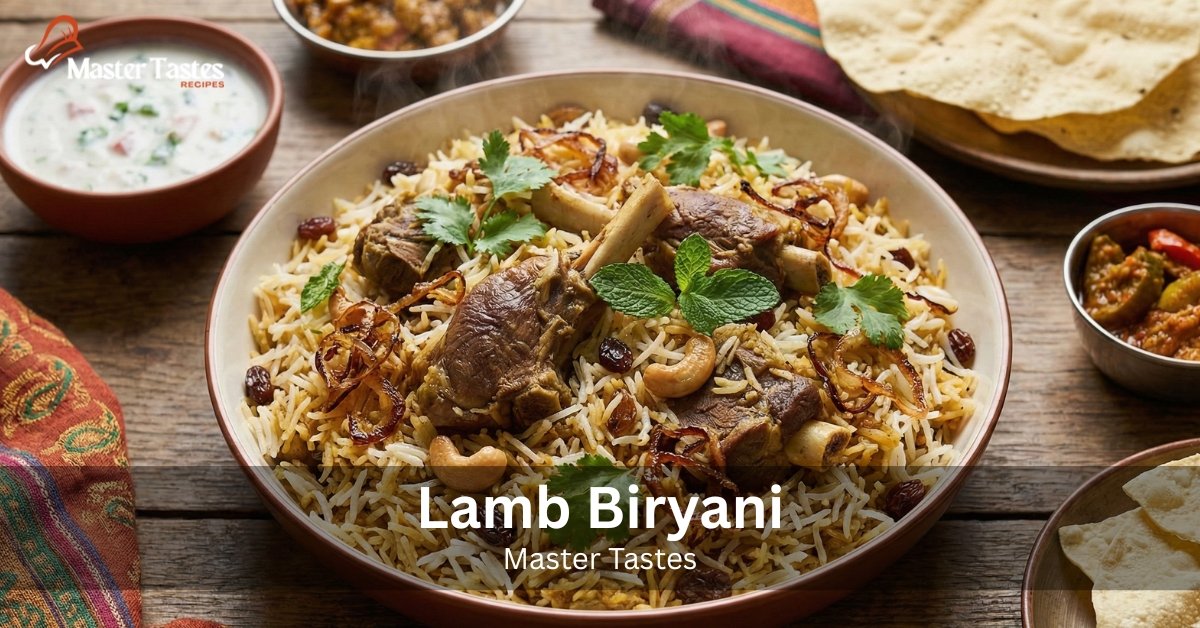
Bombay biryani is the spicy fragrant rice dish that instantly comes to mind for anyone in Mumbai or most of western India whenever biryani is mentioned. It is easy to spot because of the big pieces of fried potato the sour kick from dried plums the mountain of crispy brown onions and the strong punch of garam masala. The meat (mutton or chicken) cooks down with thick yogurt and fresh tomatoes until it becomes super tender. Then you put half-cooked basmati rice in layers and let the whole pot steam slowly on dum. The final taste is deep smoky a little tangy and completely satisfying. In Bombay you will find it at every big celebration Sunday family meals or just a random weekday treat. This recipe brings that proper restaurant flavour straight to your kitchen using only regular utensils.

Ingredients
| Ingredient | For 0.5 kg meat (serves 4-5) | For 1 kg meat (serves 8-10) | For 2 kg meat (serves 16-20) |
|---|---|---|---|
| Mutton or chicken (bone-in) | 500 g | 1 kg | 2 kg |
| Basmati rice | 400 g | 800 g | 1.6 kg |
| Potatoes (medium) | 2 | 4 | 8 |
| Onions (large, thinly sliced) | 3 | 6 | 12 |
| Tomatoes (medium) | 3 | 6 | 12 |
| Yogurt (whisked) | 200 g | 400 g | 800 g |
| Ginger-garlic paste | 2 tbsp | 4 tbsp | 8 tbsp |
| Dried plums (aloo bukhar) | 8-10 | 16-20 | 35-40 |
| Green chillies (slit) | 4 | 8 | 16 |
| Fresh mint leaves | 1 cup | 2 cups | 4 cups |
| Fresh coriander leaves | 1 cup | 2 cups | 4 cups |
| Lemon juice | 2 tbsp | 4 tbsp | 8 tbsp |
| Kewra water | 1 tsp | 2 tsp | 4 tsp |
| Yellow food colour or saffron | a pinch | ¼ tsp | ½ tsp |
| Oil or ghee | 150 ml | 300 ml | 600 ml |
| Salt | to taste | to taste | to taste |
| Whole spices | |||
| Cinnamon stick | 1 inch | 2 inch | 4 inch |
| Black cardamom | 2 | 4 | 8 |
| Green cardamom | 6 | 12 | 24 |
| Cloves | 6 | 12 | 24 |
| Black peppercorns | 10 | 20 | 40 |
| Bay leaves | 2 | 4 | 8 |
| Powder spices | |||
| Red chilli powder | 1.5 tsp | 3 tsp | 6 tsp |
| Turmeric powder | ½ tsp | 1 tsp | 2 tsp |
| Coriander powder | 1 tbsp | 2 tbsp | 4 tbsp |
| Garam masala powder | 1 tsp | 2 tsp | 4 tsp |

How to Make
- Soak basmati rice in water for 30 minutes then drain.
- Boil plenty of water with half the whole spices 1 tbsp salt and a bay leaf. Add soaked rice and cook until 70% done (grain should break but still have a bite). Drain and set aside.
- Peel and cut potatoes into big chunks. Fry in hot oil until golden and half cooked. Remove and keep aside.
- In the same oil fry sliced onions in batches until deep golden brown. Remove half for layering later.
- the rest will stay in the pot.
- Add remaining whole spices to the oil then ginger-garlic paste. Fry one minute.
- Add meat pieces and fry on high heat until colour changes.
- Lower heat add yogurt tomatoes powder spices and salt. Cook on medium flame stirring often until oil separates and meat is almost tender (about 30 to 40 minutes for chicken 60 to 80 minutes for mutton). Add little water if needed.
- Add fried potatoes and dried plums. Cook another 10 minutes. Taste and adjust salt and chilli.
- Mix food colour or saffron in 2 tbsp warm milk.
- In a large heavy-bottom pot spread a little oil at bottom. Add half the rice.
- Put all the meat curry on top. Spread fried potatoes and plums evenly.
- Sprinkle fried onions mint coriander lemon juice and garam masala.
- Cover with remaining rice. Pour coloured milk or saffron on top and drizzle kewra water.
- Add remaining fried onions and a spoon of ghee on very top.
- Seal the pot with foil or dough and put tight lid. Cook on high flame 5 minutes then lowest flame 20 to 25 minutes.
- Turn off heat and let it rest 10 minutes before mixing gently and serving.
Instructions
Use good quality aged basmati for best aroma. I usually wash the rice three times until water runs clear. If you like extra sour taste add one more spoon lemon juice or a few extra dried plums. For party quantity start a day early – marinate meat overnight and parboil rice then cool and keep in fridge. Next day just layer and dum. Always give at least ten minutes resting time after dum – that’s when flavours really come together. Serve with cucumber raita sliced onions and lemon wedges. Cold Mirinda or Rooh Afza on the side never hurts either.
History
Origin of Bombay Biryani
You know many people don’t realize that Bombay biryani is not actually from ancient royal kitchens like Lucknow or Hyderabad versions. It started much later right here in the streets of Bombay (now Mumbai) in the early 1900s. Bohra Muslim traders and Persian-influenced cooks who settled in the bustling port city created this style. They mixed the Mughlai dum method they knew with local Maharashtrian love for potatoes and the sour dried plums that came on ships from Afghanistan and Iran. The first proper Bombay biryani was sold by small Bohra eateries near Crawford Market and Dongri. Those places are still there today and the taste hasn’t changed much.
Traditional ingredients and methods
I think this part is quite interesting because real old-school Bombay biryani always has potatoes – something you almost never see in other biryanis. The potatoes soak up the masala and become soft inside with a crispy fried edge. Another thing is the heavy use of tomatoes and yogurt together which gives that slightly reddish thick gravy. Traditional cooks used big copper lagans over wood or charcoal fire. They would fry everything in pure ghee and the smoke from the wood gave a special taste that’s hard to get on gas nowadays. Dried plums were expensive back then so having ten or twelve in one plate showed the cook was generous. Even the rice was local “Ambemohar” before basmati became common in the 1960s.
How Bombay biryani became different from others
Some people say it started this way but actually the biggest change came after the 1940s when thousands of people moved to Bombay from Uttar Pradesh and Hyderabad. Those migrants brought their own recipes but the local Bohra and Irani cafes kept the potato and plum version because customers loved it. Places like Shalimar in Bhendi Bazaar or Noor Mohammadi near Mohammad Ali Road made the style famous. They made it spicier and heavier to suit workers who needed a filling meal after long shifts. The layers became thicker and the dum time longer so the meat almost melted. That’s when Bombay biryani got its own identity – richer than Hyderabadi more potatoes than Lucknow and way more chillies than Awadhi style.
Regional variations inside the city itself
Funny thing is even inside Mumbai you’ll find small differences. In Bandra and Behram Baug the Bohri community makes a slightly sweeter version with more dried plums and less chilli. Down in Navpada and Pydhonie the Muslim areas near Crawford Market it’s version is fiery and dark red from extra tomatoes. Then you have the Irani cafe style around Grant Road that adds a little vinegar for sourness instead of only lemon. Chicken Bombay biryani is newer – maybe from the 1980s when mutton got expensive. Most old timers still say mutton tastes better because the bones give deeper flavour to the rice.
Cultural significance
I remember hearing that during Ramzan the lanes of Bhendi Bazaar and Minara Masjid smell only of Bombay biryani from sunset to midnight. Huge degs feed hundreds after taraweeh prayers. At Bohra weddings they still serve “lagan nu biryani” which is basically the same recipe but cooked in even bigger quantities – sometimes 100 kg rice at once. On Milad-un-Nabi many shops give free plates to anyone who walks in. Even non-Muslims queue up because the taste crosses every line. In old Bombay cinema you’ll see heroes eating biryani on Marine Drive – that plate was almost always Bombay style.
How it spread and modern use
Maybe it began a bit differently back then but after the 1990s Bombay biryani travelled everywhere with migrant workers. Today you find almost the same taste in Karachi because many Mumbai cooks moved there. In the Gulf countries thousands of Maharashtrian and Gujarati Muslims cook Bombay biryani at home and in restaurants. Even in London and New Jersey the Pakistani and Indian restaurants label it “Bombay biryani” so customers know it has potatoes and plums. Frozen ready-to-eat packets in Indian stores abroad are usually this style. Street vendors in Pune Surat and Ahmedabad copied it too so now half of western India thinks biryani means potatoes inside. Some new places add cheese or paneer but old-school fans hate that – they say real Bombay biryani should stain your fingers orange and make you reach for cold raita after every bite.
The recipe keeps changing a little with every family. My neighbour adds star anise nobody else does. Some people skip plums when they’re out of season and use tamarind instead. I usually do this part differently – I fry the potatoes twice so they stay crisp even after dum. But however you make it the smell when you open that pot after twenty five minutes on low flame is always the same – pure Bombay.
That’s pretty much it I guess. Every family has their own small twist but the soul stays the same. It always turns out a bit different each time and that’s what makes it fun.
FAQ’s
Why do they put potatoes in Bombay biryani?
Because the old Bohra cooks in Mumbai started adding big fried potato chunks more than a hundred years ago. Potato drinks up the thick masala and makes every bite feel heavy and satisfying. Without aloo nobody here calls it proper Bombay biryani.
What makes Bombay biryani different from Hyderabadi biryani?
Bombay style always has fried potatoes sour dried plums lots of tomato and mountains of brown onions. Hyderabadi never uses these things and stays lighter with more saffron and less chilli.
Is Bombay biryani supposed to be very spicy?
Most places make it quite hot yes. Good street style has six to eight green chillies per kilo meat so keep raita or cold yoghurt close.
Can I make Bombay biryani with chicken instead of mutton?
Of course. Chicken version became common once mutton turned expensive but now half the city actually likes chicken more because it cooks quick and stays soft.
Why do people say Bombay biryani instead of Mumbai biryani?
The name got stuck when the city was still called Bombay everywhere. Even after the name changed in 1995 everyone kept the old name because it just sounds better for the dish.
Which place in Mumbai serves the best Bombay biryani today?
Old school fans still run to Noor Mohammadi near Mohammad Ali Road Shalimar in Bhendi Bazaar or Jaffer Bhai Delhi Darbar. Those three taste exactly like they did thirty years back.
How do I get that smoky taste at home without coal?
Just give proper dum on very low flame for twenty five minutes and if you want extra smoke put one small burning charcoal in a steel bowl with a drop of ghee inside the pot for the last five minutes. Works every time.
What if I don’t have dried plums can I still make it?
You can but the sour kick will be missing. Add little tamarind juice or extra lemon at the end. It helps but real aloo bukhar taste is hard to copy.
How many days does homemade Bombay biryani stay good in fridge?
Easily two three days. Actually tastes better the next day because rice soaks up even more masala. Just sprinkle little water and warm slowly.
Is Bombay biryani originally Pakistani or Indian?
Fully Indian born in Mumbai streets. Karachi version tastes almost same now because many Mumbai families moved there after partition and took the recipe along. But it started right here in Bombay.
Follow our social media Accounts for updates:

Hi, I’m Emma, a passionate home chef and the heart behind MasterTastes.com. With over 5 years of hands on experience in the kitchen. I specialize in creating simple flavorful and foolproof recipes that bring restaurant quality taste to everyday home cooking.
From quick weeknight meals and traditional Pakistani & Indian classics to modern fusion dishes and indulgent desserts my recipes are tested budget friendly and designed for real life kitchens especially for beginners and busy home cooks.
My goal is simple: to help you cook with confidence impress your family and guests and turn every meal into a delicious memory.

3 thoughts on “Bombay Biryani”